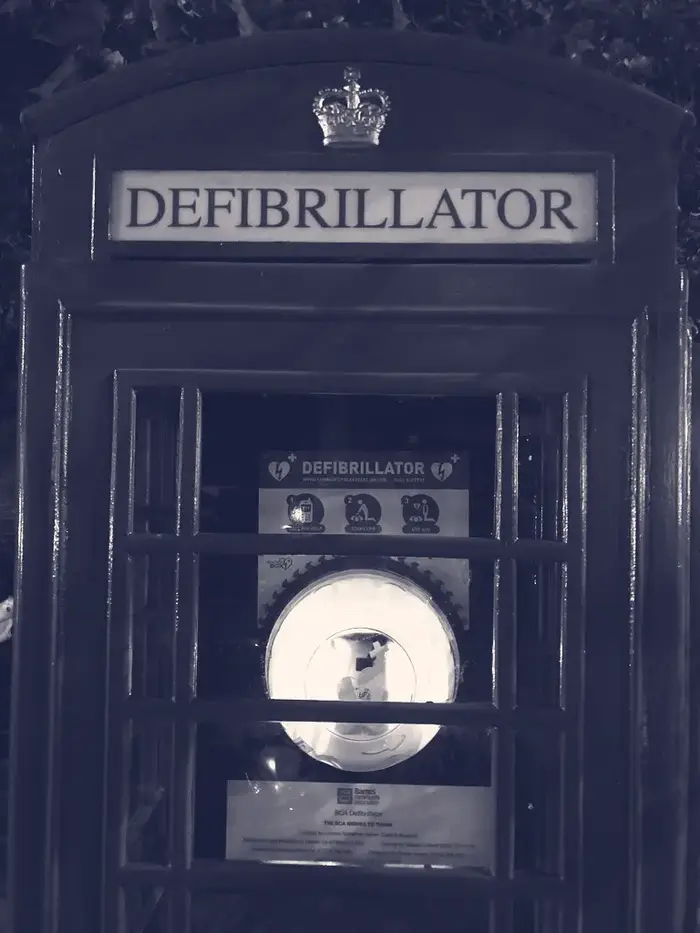
Someone has collapsed and isn’t breathing normally? Call 999, start CPR, and send someone for the defibrillator. Don’t wait for it to arrive before starting CPR.
What a defibrillator does
In most cardiac arrests, the heart’s electrical system goes into a chaotic rhythm called ventricular fibrillation. The heart quivers instead of pumping, and blood stops reaching the brain. A defibrillator, or AED (automated external defibrillator), sticks to the chest with two pads, checks the heart’s rhythm, and if needed gives an electric shock to reset it.
According to the British Heart Foundation, fewer than 1 in 10 people survive a cardiac arrest outside hospital in the UK. Starting CPR and using a defibrillator within minutes can more than double someone’s chance of surviving.
You can’t get it wrong
How to find one
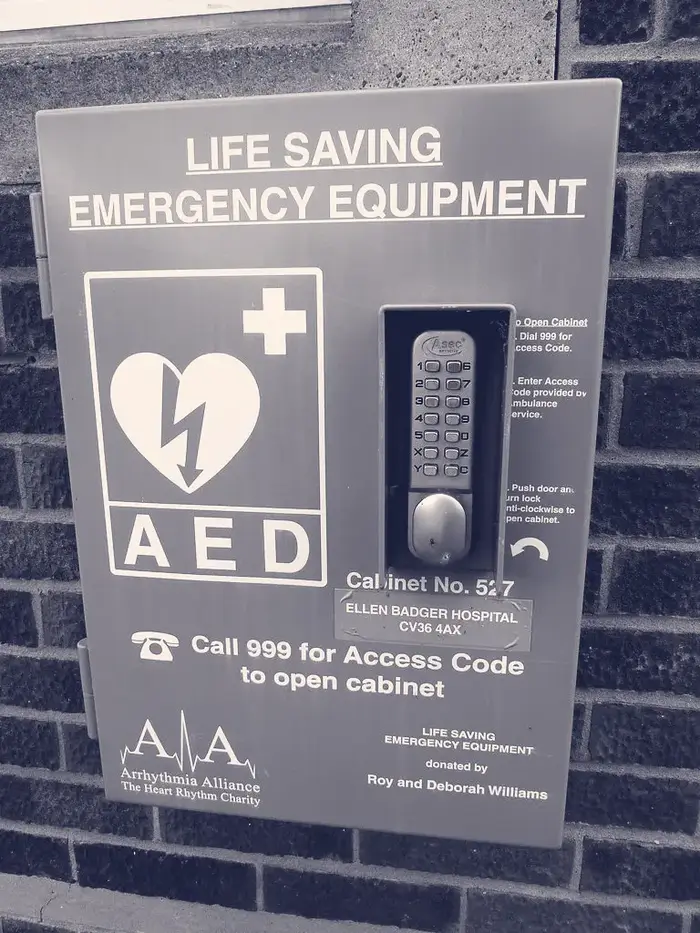
- Call 999. The call handler can see registered defibrillators near you on a national database called The Circuit, and will tell you where the nearest one is and give you the code if it’s in a locked cabinet.
- Look now, before you need it. Use Defib Finder from the British Heart Foundation to find the ones nearest your home, your work and places you visit often.
- Look for the sign: a green or yellow sign with a heart and a lightning bolt. Common places include train stations, shopping centres, leisure centres, schools, village halls, supermarkets, pharmacies, GP surgeries and old red phone boxes.
Using one, quickly
- Turn it on.Open the lid or press the button. Then do what it says.
- Bare the chest.Remove or cut clothing. Wipe the chest if it’s wet.
- Stick the pads where the pictures show.One below the right collarbone, one on the left side under the armpit. Keep CPR going while someone else does this.
- Stand clear when it says.Nobody touches the person while it analyses and shocks.
- Start CPR again straight away.Whatever it said. It will re-check every 2 minutes.
See the full CPR and defibrillator guide, including children and babies.
Getting a defibrillator for your community
Many public defibrillators were bought by parish councils, residents’ groups, sports clubs, workplaces, faith groups and local fundraising. A typical defibrillator costs somewhere around £1,000 to £1,500, plus more for a heated outdoor cabinet if it will be outside.
- Choose a spot that’s reachable 24 hours a day.Outside, well lit and easy to describe to a 999 call handler.
- Decide on a cabinet.Locked cabinets have a code that 999 gives out. Unlocked ones are faster to open.
- Register it on The Circuit.This is how 999 call handlers know it exists. An unregistered defibrillator may never be used. Registration is free.
- Appoint a guardian.Someone who checks it regularly, replaces pads and batteries before they expire, and updates its status on The Circuit.
The British Heart Foundation has guidance on looking after a defibrillator.
Sources
This page is based on the published guidance below. It was last updated on 30 September 2026. Read how we write our content, or email hello@chestpain.org.uk to report a mistake.