Chest pain right now? Stop reading and call 999, or open Emergency mode.
Why aspirin helps
Most heart attacks are caused by a blood clot forming on a fatty patch inside a heart artery. Aspirin makes the tiny blood cells called platelets less sticky, which helps stop the clot growing while you wait for treatment. Chewing the tablet gets it into your bloodstream faster than swallowing it whole.
How to take it
- Call 999 first.Never delay calling to go and look for aspirin.
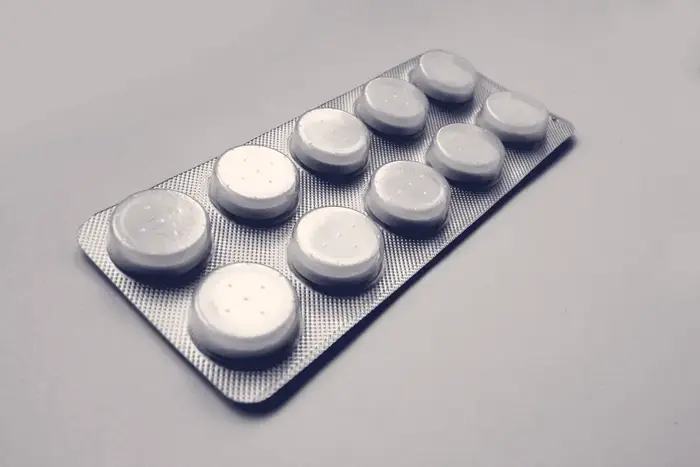
- Chew one 300mg aspirin, then swallow.Only if it’s within reach and you’re not allergic. Plain or dispersible aspirin is best.
- Tell the paramedics.Say what you took and when, so they don’t give you a second dose.
Don’t take aspirin if
Never give aspirin for a suspected stroke. Some strokes are caused by bleeding in the brain, and aspirin can make them worse. Signs of a stroke are a drooping face, weak arm, or slurred or muddled speech. Call 999 and don’t give any medicine.
Common questions
I already take a daily low-dose aspirin. Should I still take one?
Tell the 999 call handler. Ambulance guidance usually still gives a 300mg dose in a suspected heart attack, even if you take a daily 75mg tablet, but let them decide.
I only have 75mg tablets.
Tell the call handler what you have and they’ll tell you how many to take. Don’t guess.
I take a blood thinner like warfarin, apixaban or rivaroxaban.
Tell the call handler before taking aspirin and follow their advice.
Can I take ibuprofen or paracetamol instead?
No. They don’t help with a heart attack, and ibuprofen can be harmful. Only aspirin has this effect.
I’m pregnant.
Tell the call handler you’re pregnant and follow their advice. See chest pain in pregnancy.
The tablets say “enteric coated” or “gastro-resistant”.
These are designed to dissolve slowly. They work less quickly in an emergency. Tell the call handler what you have.
Keep some at hand
A pack of 300mg aspirin costs very little from any pharmacy or supermarket. Keep a few in the kitchen drawer, in your bag and in the car, especially if you or someone you live with is at higher risk. Check the expiry date once a year.
Should I take aspirin every day to prevent a heart attack?
Not unless a doctor has told you to. For people who already have heart or circulation disease, daily low-dose aspirin lowers the risk of another heart attack or stroke. For people who don’t, the risk of serious bleeding outweighs the benefit, so UK guidance doesn’t recommend it. Talk to your GP before starting.
Sources
This page is based on the published guidance below. It was last updated on 30 September 2026. Read how we write our content, or email hello@chestpain.org.uk to report a mistake.